
TRAUMAVIS FORTE: Understanding the Role of Trypsin, Bromelain and Rutoside in Inflammation, Edema and Recovery
TRAUMAVIS FORTE combines Trypsin, Bromelain and Rutoside Trihydrate to provide supportive management of inflammation, edema and tissue trauma, helping support comfort and recovery following injury or surgery.

vision-plus
admin@visionplushealthcare.com
Inflammation and swelling are common responses to tissue injury and surgery. Although inflammation is an essential part of normal healing, excessive or persistent inflammatory activity can contribute to pain, tenderness, edema and temporary limitation of movement.
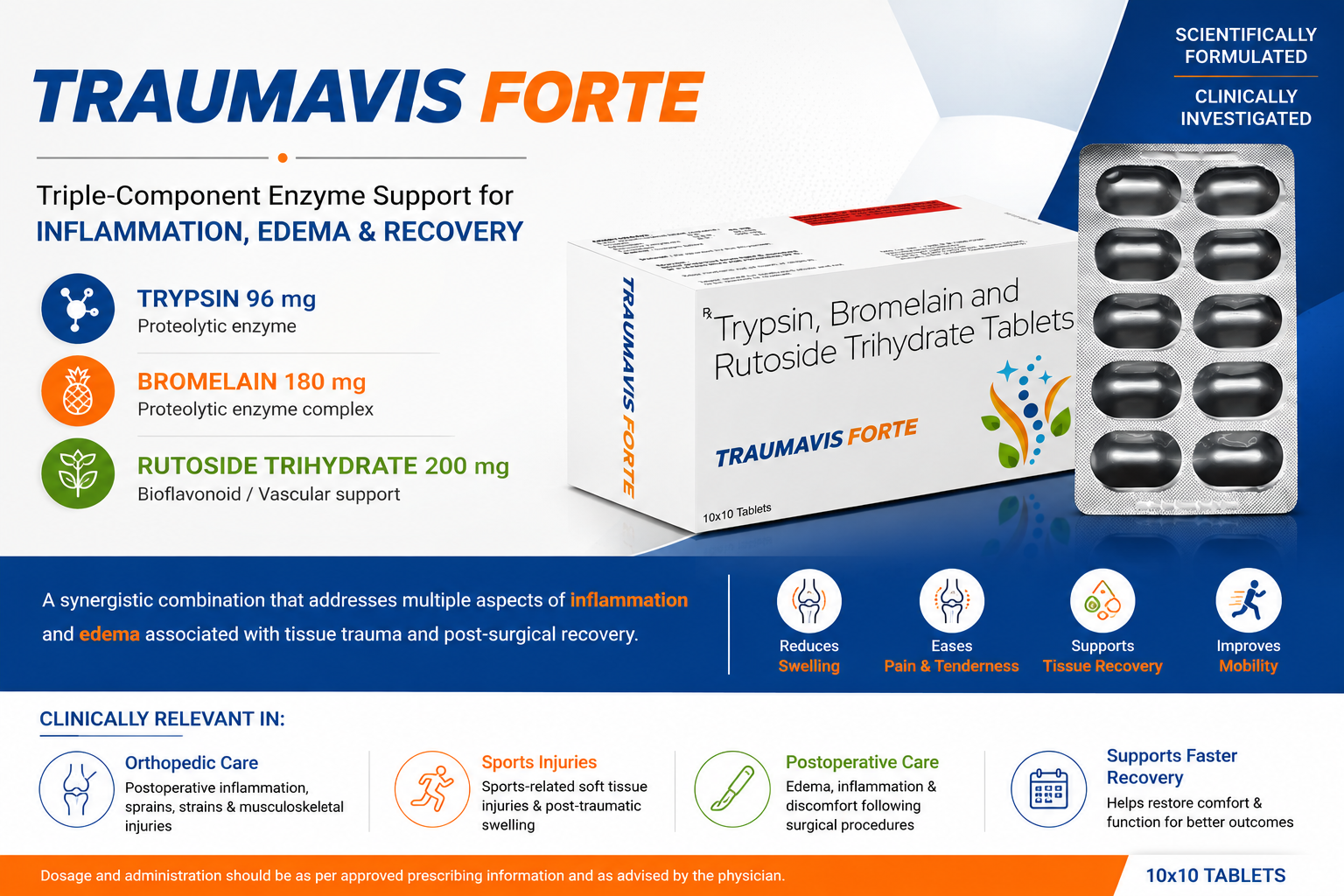
TRAUMAVIS FORTE contains a combination of Trypsin 96 mg, Bromelain 180 mg and Rutoside Trihydrate 200 mg. The formulation brings together proteolytic enzymes and a flavonoid component and may be considered, where appropriate and in accordance with approved product information, as part of supportive management in clinical situations associated with inflammation and tissue trauma.
Importantly, the clinical evidence for enzyme combinations should be interpreted according to the specific formulation, dose, indication and patient population studied. Evidence from clinical trials of another formulation should not automatically be considered evidence of identical efficacy for every product containing the same ingredients.
Understanding Inflammation After Tissue Injury
Following trauma or surgery, the body initiates a coordinated inflammatory response. This involves changes in local blood flow, vascular permeability, inflammatory mediators and movement of fluid into surrounding tissues.
This response is an important component of tissue repair. However, inflammation and associated edema can also contribute to:
- Pain and tenderness
- Local swelling
- Temporary restriction of movement
- Discomfort during recovery
- Functional limitations during the early recovery period
Consequently, management of pain, swelling and inflammation may form part of comprehensive postoperative or post-traumatic care, depending on the underlying condition.
The Science Behind TRAUMAVIS FORTE
TRAUMAVIS FORTE combines three pharmacologically relevant components:
| Component | Strength per tablet | General pharmacological relevance |
|---|---|---|
| Trypsin | 96 mg | Proteolytic enzyme |
| Bromelain | 180 mg | Mixture of proteolytic enzymes |
| Rutoside Trihydrate | 200 mg | Flavonoid/bioflavonoid component |
Trypsin: Proteolytic Enzyme
Trypsin is a proteolytic enzyme involved in the breakdown of proteins. Oral systemic enzyme preparations containing trypsin have been investigated in inflammatory and postoperative settings.
The proposed rationale for systemic proteolytic enzyme therapy includes potential effects on processes associated with inflammation and tissue injury. However, proposed biological mechanisms should not be interpreted as proof of clinical efficacy for a particular product or indication.
Bromelain: Proteolytic Enzyme Complex
Bromelain refers to a group of proteolytic enzymes obtained from pineapple (Ananas comosus). It has been investigated in a number of clinical settings, including postoperative pain and swelling.
According to the U.S. National Center for Complementary and Integrative Health (NCCIH), oral bromelain has been studied for postoperative symptoms such as pain and swelling, particularly following dental surgery. However, the available evidence varies according to the condition and formulation studied, and the effects of bromelain alone are not established for all inflammatory conditions.
Rutoside Trihydrate: Flavonoid Component
Rutoside is a flavonoid compound. Rutoside derivatives have been investigated in relation to microvascular function, vascular permeability and edema, particularly in venous disorders.
Evidence concerning rutoside-containing preparations is indication-specific, and findings from studies of hydroxyethylrutosides or other rutoside preparations should not automatically be extrapolated to rutoside trihydrate in every clinical setting.
Why Combine Trypsin, Bromelain and Rutoside?
The rationale for combining these ingredients is based on their different pharmacological characteristics.
Trypsin
↓
Proteolytic enzyme activity
Bromelain
↓
Proteolytic enzyme activity and investigated inflammation-related effects
Rutoside
↓
Flavonoid component with vascular/microcirculatory relevance
Combined formulation
↓
Potential supportive role in clinical situations involving inflammation, edema and tissue trauma
This represents a pharmacological rationale, rather than a guarantee of additive or synergistic clinical efficacy.
What Does the Clinical Evidence Show?
Clinical research has evaluated oral combinations containing trypsin, bromelain and rutoside in postoperative and musculoskeletal settings.
Evidence After Total Hip Replacement
A randomized, double-blind, placebo-controlled exploratory trial evaluated an oral enzyme combination containing 90 mg bromelain, 48 mg trypsin and 100 mg rutoside in patients undergoing elective total hip replacement.
Thirty-four patients were randomized, with 33 completing the study. Compared with placebo, the enzyme-combination group had a significantly lower cumulative CRP exposure over the first postoperative week and reported less postoperative pain during days 1–7. The investigators concluded that the combination warranted further evaluation as a potential option for postoperative recovery.
Because this was a small exploratory study and used a different strength from TRAUMAVIS FORTE, the results should be interpreted as evidence concerning the studied formulation rather than direct proof of equivalent efficacy for TRAUMAVIS FORTE.
Evidence in Orthopedic Wound Management
A randomized clinical trial evaluated oral enzyme preparations following orthopedic surgery. One treatment arm received a combination containing 48 mg trypsin, 90 mg bromelain and 100 mg rutoside. Outcomes included wound-related parameters such as erythema, edema, local irritation, tenderness and pain.
The study found differences between treatment groups, but the results did not establish that the trypsin-bromelain-rutoside combination was superior to all comparator treatments across the assessed outcomes.
More Recent Clinical Research
A 2025 randomized, double-blind, placebo- and active-controlled study investigated systemic enzyme therapy following orthopedic surgery. The study included a trypsin-bromelain-rutoside comparator arm and evaluated postoperative symptoms and inflammatory outcomes.
These findings add to the clinical literature on systemic enzyme therapy, but—as with all clinical evidence—the relevance depends on the formulation, dose, treatment duration, comparator and population studied.
Evidence for Bromelain in Postoperative Swelling
Bromelain has also been investigated independently of the three-component combination.
A systematic review and meta-analysis of randomized clinical trials evaluated oral bromelain following mandibular third-molar surgery. The analysis suggested potential benefits for postoperative facial swelling and some later postoperative pain outcomes, although effects varied across outcomes and time points.
NCCIH notes that relatively few studies have evaluated oral bromelain and that evidence for conditions other than certain postoperative or sinus-related applications remains limited or uncertain.
This supports a cautious interpretation: bromelain is clinically investigated, but its evidence base should not be generalized indiscriminately to all inflammatory conditions or all bromelain-containing products.
Inflammation, Edema and Pain: A Connected Clinical Picture
Inflammation, edema and pain often occur together following tissue injury.
A simplified sequence is:
Tissue injury
↓
Inflammatory response
↓
Changes in vascular permeability and local tissue environment
↓
Fluid accumulation / edema
↓
Pain, tenderness and temporary functional limitation
Managing these components may therefore be relevant to comprehensive supportive care after selected injuries or surgical procedures.
However, the underlying cause of pain or swelling must always be considered. Symptoms may also indicate complications such as infection, bleeding, vascular problems or other conditions requiring specific treatment.
Potential Clinical Relevance
Based on the available literature on systemic enzyme combinations, potential areas of clinical interest include:
Orthopedic and Post-Traumatic Care
- Postoperative inflammatory symptoms
- Soft-tissue trauma
- Sprains and strains
- Musculoskeletal injuries
- Postoperative edema
Postoperative Recovery
Systemic enzyme combinations have been investigated in postoperative settings, including orthopedic surgery. Clinical use should be based on the approved indication and prescribing information for the individual product.
Sports and Musculoskeletal Medicine
Enzyme preparations have also been studied in acute musculoskeletal injuries. For example, a randomized study investigated an oral combination of rutoside, bromelain and trypsin in acute lateral ankle sprain.
These areas represent clinical research contexts and should not be interpreted as a universal indication for TRAUMAVIS FORTE unless supported by its approved product labeling.
TRAUMAVIS FORTE Formulation at a Glance
| Ingredient | Amount per tablet | Role |
|---|---|---|
| Trypsin | 96 mg | Proteolytic enzyme |
| Bromelain | 180 mg | Proteolytic enzyme complex |
| Rutoside Trihydrate | 200 mg | Flavonoid component |
An Important Point About Clinical Evidence
Published clinical studies of trypsin-bromelain-rutoside combinations have commonly evaluated formulations containing 48 mg trypsin, 90 mg bromelain and 100 mg rutoside.
TRAUMAVIS FORTE, as described here, contains 96 mg trypsin, 180 mg bromelain and 200 mg rutoside trihydrate per tablet.
Therefore, clinical evidence from the lower-strength formulations should be regarded as supporting evidence for the ingredient combination, rather than direct clinical evidence for the exact TRAUMAVIS FORTE dose.
Safety and Appropriate Use
The suitability of systemic enzyme therapy depends on the patient's clinical circumstances, concomitant medications and the indication being treated.
Bromelain may cause adverse effects such as gastrointestinal symptoms, and allergic reactions are possible, particularly in individuals with pineapple sensitivity or other allergies.
Before recommending or prescribing an enzyme combination, healthcare professionals should consider the patient's:
- Underlying diagnosis
- Current medications
- History of allergy or hypersensitivity
- Bleeding risk and relevant clinical history
- Planned or recent surgical procedures
- Other contraindications and precautions specified in the approved product information
Dosage, duration, contraindications, warnings, precautions and administration instructions should always follow the approved prescribing information for TRAUMAVIS FORTE and the treating healthcare professional's judgment.
Frequently Asked Questions
What is TRAUMAVIS FORTE?
TRAUMAVIS FORTE is a tablet formulation containing Trypsin 96 mg, Bromelain 180 mg and Rutoside Trihydrate 200 mg, as specified in the product formulation provided for this article.
What is trypsin?
Trypsin is a proteolytic enzyme. Systemic preparations containing trypsin have been investigated as supportive therapy in inflammatory and postoperative settings.
What is bromelain?
Bromelain is a group of proteolytic enzymes derived from pineapple. Oral bromelain has been studied particularly in relation to postoperative pain and swelling, although the strength of evidence varies by clinical condition.
What is the role of rutoside?
Rutoside is a flavonoid compound. Rutoside derivatives have been studied for effects related to vascular permeability, microcirculation and edema, particularly in venous disorders. Evidence should be interpreted according to the specific preparation and indication studied.
Has the trypsin-bromelain-rutoside combination been clinically studied?
Yes. Combinations containing these three ingredients have been investigated in postoperative orthopedic care and other musculoskeletal settings. A randomized exploratory trial after total hip replacement reported reductions in postoperative CRP exposure and pain with a combination containing 48 mg trypsin, 90 mg bromelain and 100 mg rutoside.
Does evidence for another trypsin-bromelain-rutoside product prove that TRAUMAVIS FORTE has the same efficacy?
No. Clinical efficacy depends on the exact formulation, dose, treatment schedule, patient population and indication studied. TRAUMAVIS FORTE contains different ingredient strengths from several published studies, so those findings should not be presented as direct clinical proof for this specific product.
Can TRAUMAVIS FORTE be used for every type of pain or swelling?
No. Pain and swelling can have many causes, including conditions requiring specific medical treatment. Product use should be restricted to approved indications and determined by an appropriately qualified healthcare professional.
Is TRAUMAVIS FORTE a replacement for analgesics or other postoperative treatment?
It should not automatically be considered a replacement for standard postoperative or injury management. Pain control, wound care, rehabilitation and treatment of the underlying condition remain important components of appropriate clinical care.
How should TRAUMAVIS FORTE be taken?
Dosage and duration should follow the approved product prescribing information and the treating physician's clinical judgment. The regimen should not be inferred from clinical trials of differently formulated enzyme products.
Key Takeaways
TRAUMAVIS FORTE combines:
Trypsin 96 mg
→ Proteolytic enzyme
Bromelain 180 mg
→ Proteolytic enzyme complex
Rutoside Trihydrate 200 mg
→ Flavonoid component
The combination has a biological rationale and has been clinically investigated in postoperative and musculoskeletal settings. Published studies have reported findings involving postoperative pain, inflammatory markers and wound-related symptoms, but results are formulation- and indication-specific.
For TRAUMAVIS FORTE specifically, claims of efficacy should be based on evidence for the exact marketed formulation and its approved indications, rather than extrapolation alone from studies of other enzyme preparations.
Conclusion
Inflammation and edema are integral components of the response to tissue injury and surgery. When clinically appropriate, management of these processes may contribute to comprehensive postoperative and post-traumatic care.
TRAUMAVIS FORTE combines trypsin, bromelain and rutoside trihydrate, bringing together proteolytic enzyme activity and a flavonoid component in a single formulation.
The scientific literature provides clinical evidence for the investigation of trypsin-bromelain-rutoside combinations in postoperative and musculoskeletal settings. At the same time, the evidence should be interpreted carefully, particularly because published studies may use different doses and formulations.
Accordingly, TRAUMAVIS FORTE should be positioned as a specific enzyme combination for appropriate clinical situations involving inflammation and tissue trauma, subject to its approved product information, rather than as a universal treatment for pain, swelling or inflammation.
TRAUMAVIS FORTE
Trypsin + Bromelain + Rutoside Trihydrate
A triple-component enzyme formulation for appropriate clinical situations involving inflammation, edema and tissue trauma.
Medical Disclaimer
This article is intended for educational and healthcare-professional information purposes only. It does not constitute medical advice, diagnosis or treatment. Product indications, dosage, contraindications, warnings, precautions and administration should be based on the current approved prescribing information for TRAUMAVIS FORTE and the judgment of a qualified healthcare professional.
Clinical evidence relating to individual ingredients or other formulations should not automatically be interpreted as evidence of equivalent efficacy or safety for TRAUMAVIS FORTE.